

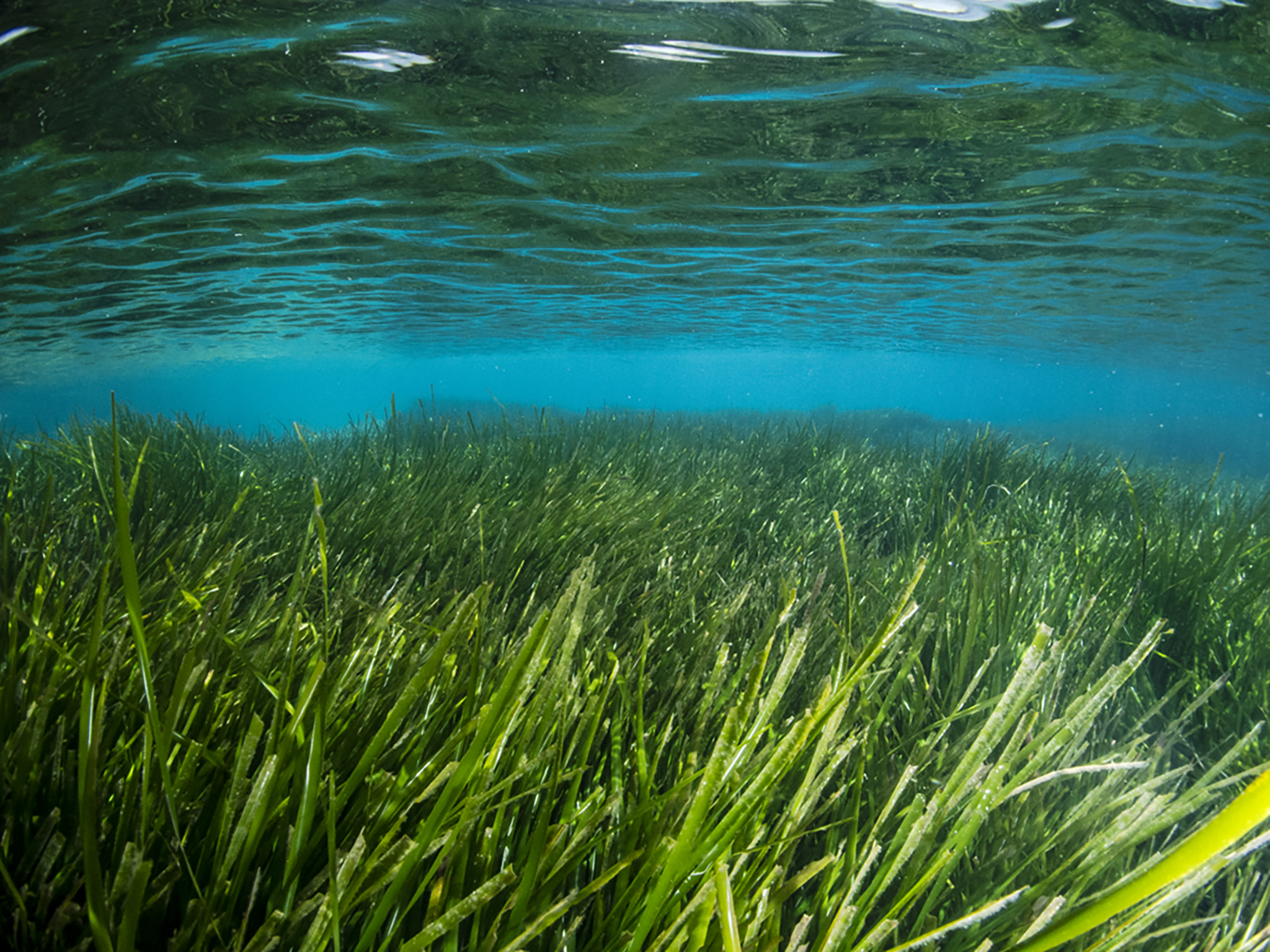
A European LIFE project for the conservation of Posidonia oceanica meadows, a marine plant that plays an important role as carbon sink for the Mediterranean, significantly helping to combat climate change
Last News

Final Conference of SeaForest: Presented Materials
On 28 November 2025, the final conference of the LIFE SeaForest project was held at the ISPRA headquarters in Rome, attracting a large and active audience both onsite and online. The event was ...

SeaForest LIFE Final Conference to Spotlight Blue Carbon Potential in Europe
Rome, 28 November 2025
As part of the Final Conference of the LIFE SeaForest project, a high-level panel titled “Implementing a Blue Carbon Model in Europe” will convene on Friday, 28 November 2025, ...

18, 19 November 2025, La Maddalena: Final Monitoring Visit
On 18 and 19 November 2025, the official monitoring visit of the SEAFOREST project took place on La Maddalena Island, organized by the project consortium in collaboration with the Parco Nazionale ...
The mooring management plan
The Posidonia oceanica meadow is threatened by various stressors, mainly related to human activities. The harbour construction, pollution, trawling, the uncontrolled anchoring and other human activities can damage the health of 1120* Habitat (Posidonia oceanicameadow).
One of the actions of the SeaForest LIFE foresees the realization of a management plan of mooring to reduce the impact of this practice on the seagrass meadows.The mooring management plans will be implemented in collaboration with the managing bodies of the National Parks that already developed specific rules for mooring and anchoring.Thanks to the identification of the areas more frequented by boats through satellite images, the sea bottom habi-tat maps and the characterization of the sea bottom by using acoustic tools (see: The carbon deposits), areas were new mooring could be developed, areas where free anchorage could be allowed and areas where protection measured could be applied will be identified.
The drawing up of a detailed mooring plan will significantly reduce the negative effects of anchoring on the Posidonia oceanica meadows and consequently on carbon storage.
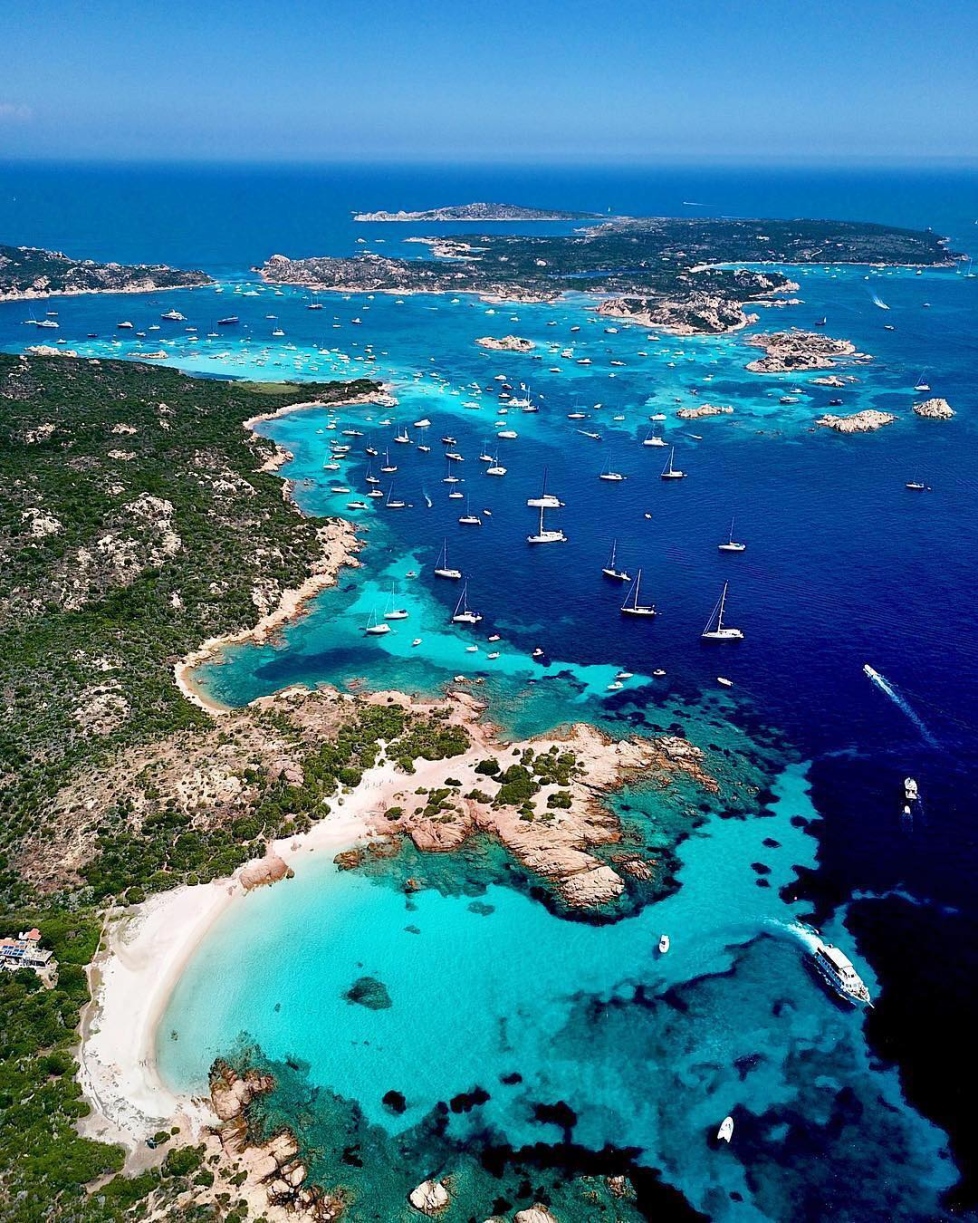
Porto della Madonna in the Arcipelago of La Maddalena National Park.
An IT platform will be developed with an application for mobile devices to make the plan available by users. The information system will be usable by anyone requesting an authorization to access the protected areas. Through the platform, the user will have to register his/her data, the technical characteristics of the boat, the date and the period of staying in the area.
The application will provide a detailed map of the available free anchor areas present in the vicinity and/or, where present, mooring fields, and will give an indication of the time of permanence granted (depending on the management policies dictated by the managing body), in order to allow a rotation of the use of the areas among all the users.The platform will be able to integrate with any payment systems for issuing authorizations available to the Entity or, in its absence, to set up an ex novo management structure.
It will also constitute an interface system for the user who will have access to information on the area, receive weather alerts or alerts if his boat is in areas where navigation and anchoring are prohibited or in areas where specific protection measures are provided.The portal will give to the user information regarding the project and the importance of protecting the Posidonia oceanica, indicating the main ecosystem services generated by the extension of the protected seagrass meadows: oxygenation and storage of CO2.
Products
In this section the documents produced within the LIFE SEAFOREST project can be consulted and downloaded.
Action A.1
- Survey database for the characterization of habitats 1120*, map of the Posidonia meadows of the 3 National Parks and Reports
- Study of the wave climate, mapping of coastal sandy deposits and analysis of seismic/acoustic data for actions C2 and C3
- Definition of carbon stocks and report on the sampling methodology for the carbon stocks of habitat 1120*
Action C.1
Action C.2
- Management plan of the anchorages and moorings of the 3 National Parks
Action C.3
- 3 mooring installation projects
- Parco Nazionale dell'Asinara
- Parco Nazionale del Cilento, Vallo di Diano e Alburni
- Parco Nazionale dell'Arcipelago de La Maddalena
- Implementation activities - Parco Nazionale dell'Arcipelago de La Maddalena
Action C.4
- Territorial agreements between site managers (municipalities and beach concessionaires) for the adoption of the ecological beach model
- Technical report of the action
Action C.5
Action C.6
- Strategic document for the adoption of the voluntary environmental credit market
- Manual of carbon sink estimation standards for habitat 1120 *
Action C.7
- Guidelines and Model of Agreement
- Report on the first conference
- Report on national workshops
- Cluster work plan
- Final report with statistics for a list of active actors participating in the agreements
Action D.1
- Action monitoring report C2
- Action monitoring report C3
- Action monitoring report C5
- Preliminary monitoring of Action C.5
- Monitoring report on Action C5
- C6 action monitoring report
- C4 action monitoring report
- C2 action monitoring report
- C7 action monitoring report
- First KPI update
- Last KPI update
Action D.2
- Questionnaire database and monitoring report on the socio-economic impact of the project
Action E.1
- Publication on the project
- Drawing of 3 bulletin boards, 12 roll-ups, 27 information boards for visiting centers and beaches and gadgets printing
- Layman's report
- Project brochure
Action E.2
- Pdf documents of the final conference
- Presentations in pdf of the participants in the initial conference
Action E.3
- Technical manual of LIFE good practices for the posidonieti
Action F.2
- Project audit report
- AfterLIFE Plan
Action F.1
- 9 partnership agreements
- 10 minutes of coordination meetings
E.3 MEDITERRANEAN NETWORK FOR THE DEFINITION OF CARBON CREDIT CERTIFICATION STANDARDS DERIVING FROM POSIDONIA MEADOWS
Status: started
Networking will be carried out between subjects who have dealt with conservation policies concerning Posidonia oceanica within LIFE projects, but also possibly with other cooperation programs.
Among the LIFE projects a specific exchange of experiences will start with Italian and international projects that present similar objectives to the SEAFOREST project.
For more information on networking visit THIS page or contact us at This email address is being protected from spambots. You need JavaScript enabled to view it.
E.2 COMMUNICATION AND AWARENESS
Status: not started
In the preliminary phase an initial workshop will be carried out to compare different experiences on the themes related to the project. In the same way, at the end of the project, a scientific-informative meeting will be held to present the results obtained from the project and to start the follow-up expost work.
As for awareness raising, this will be done to citizens, students and tourists who attend the protected areas involved in the project. These activities respond to the need to increase the awareness of the project, its objectives and actions among the users of the territories and the stakeholders, as well as to raise awareness on the needs of conservation of the target habitat of the project.

